
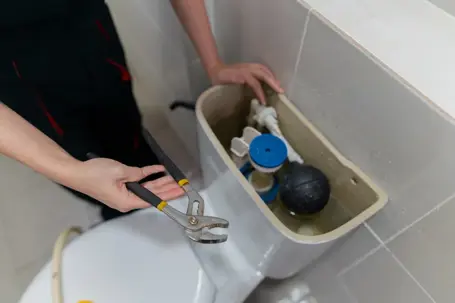
A toilet that suddenly starts overflowing is easily one of the most stressful plumbing situations a homeowner can face. Watching the water level rapidly rise over the porcelain rim and onto your bathroom floor requires immediate action to protect your home from severe water damage. While your first instinct might be to panic, staying calm and taking a few calculated steps can stop the active flooding before it ruins your flooring. Knowing exactly who to call for professional emergency plumbing assistance ensures that once the immediate crisis is contained, the underlying blockage is completely cleared.
5 Steps to Stop an Active Bathroom Flood
When water is spilling out onto your floor, you cannot afford to wait around or rush into a messy situation without a plan. Breaking the response down into clear, manageable steps helps you regain control of your bathroom instantly. Here is exactly what you need to do to halt the rising water before a minor clog turns into a major property disaster.
1. Turn Off the Toilet Shutoff Valve
Look directly behind the porcelain base of your toilet near the floor for a small chrome valve attached to the water line. Turn this football-shaped knob clockwise until it stops completely to cut off the fresh water supply entering the tank. If the valve is old and stuck, do not force it; instead, quickly move to the next manual step inside the tank.
2. Manually Lift the Float Valve
Remove the heavy ceramic lid from your toilet tank and set it carefully on a towel on the floor. Locate the floating mechanism—either a round ball on a metal rod or a plastic cylinder on a vertical tube—and pull it straight up with your hand. Holding this float upward tricks the fill valve into thinking the tank is full, instantly halting the flow of water into the bowl.
3. Secure the Flapper Seal
While looking inside the open tank, check the round rubber seal at the very bottom, which is known as the flapper. If the chain is snagged or the flapper is stuck open, water will continue to drain from the tank into the overflowing bowl. Use your hand to press the rubber flapper firmly down into the drain hole to seal it shut and stop the cycle.
4. Plunge with a Flange Plunger
Once the continuous flow of water has stopped, you can attempt to clear the blockage with a heavy-duty flange plunger that features an extended rubber sleeve at the bottom, designed specifically for toilet drains. Ensure there is enough water in the bowl to cover the rubber cup, form a tight seal around the drain hole, and push and pull vertically with firm, steady pressure.
5. Clear the Area and Assess the Damage
After successfully stopping the water or clearing the initial block, immediately use old towels to soak up any standing water on your flooring to protect your subfloor. Avoid flushing the toilet again until you are entirely certain the line is clear, as a secondary clog deeper in the pipe can cause the same issue to occur again.
Get Professional Help to Clear Your Drain Lines for Good
At Wild Water, we understand that slow is smooth, and smooth is fast. Our master-licensed plumbers never rush through a job or look for a temporary fix; we take a methodical approach to thoroughly inspect your drain lines and locate the exact source of the obstruction. We arrive on time in well-stocked vehicles equipped with professional-grade drain auger tools to safely resolve the problem on our first visit.
Do not let a clogged line disrupt your household or risk damaging your property. Contact the skilled team at Wild Water by dialing (719) 789-6937 to book an upfront evaluation with no trip fees, and let our responsive technicians handle your plumbing worries today.