
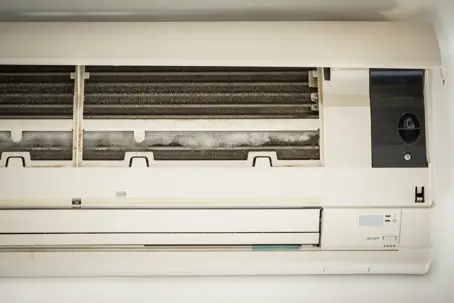
Finding a layer of frost on your cooling system during a sweltering Colorado Springs afternoon is more than just a strange sight; it is a flashing red light that your system is in distress. Many homeowners assume that ice simply means the unit is working "extra hard," but the reality is exactly the opposite. When frozen coils occur, your system is struggling to breathe, and continuing to run it can lead to catastrophic mechanical failure. Identifying the root cause early and calling a professional AC repair service is the only way to safeguard your investment and indoor comfort.
Why Your AC Is Freezing Up
At Wild Water, we take a methodical approach to diagnostics because we know that "slow is smooth, and smooth is fast." To understand why your unit is icing up, you have to understand how it works. Your air conditioner uses refrigerant to absorb heat from your indoor air. If there isn't enough warm air blowing over the evaporator coils, the temperature drops below freezing. This causes moisture in the air to instantly freeze on the metal, forming an insulating layer of ice that prevents the system from cooling your home.
1. Restricted Airflow
The most common culprit we encounter in El Paso County is a simple lack of air. If the blower fan cannot pull enough warm air from the house across the cold coils, the temperature stays too low. Common causes include:
Extremely dirty or clogged air filters
Blocked or closed supply vents in multiple rooms
Furniture or curtains obstructing the return air grills
Accumulated dust and debris on the indoor evaporator coil itself
2. Low Refrigerant Levels
Contrary to popular belief, refrigerant is not "used up" like gasoline. It circulates in a closed loop. If levels are low, a leak must be sealed. Low system pressure causes the remaining refrigerant to expand too much, making it much colder than intended. Our master mechanical technicians don't just "top it off"—we find the source of the leak to ensure a long-term solution.
3. Faulty Blower Motors
If the fan isn't spinning at the correct speed, the cold air stays trapped inside the unit. A failing motor or a snapped fan belt means the "chill" never leaves the cabinet, leading to a rapid ice buildup.
4. Dirty Evaporator Coils
Over time, dust can bypass even a good filter. This layer of grime acts as an insulator, preventing the refrigerant from efficiently absorbing heat. This thermal mismatch can lead to a frozen block of ice that can eventually weigh down and damage your unit's delicate fins.
5. Thermostat Malfunctions
Sometimes the system's brain is the problem. If a thermostat is miscalibrated, it may keep the AC running constantly, even after the desired temperature is reached. This non-stop operation doesn't give the system a chance to go through its natural defrost cycle.
Protecting Your Home From Water Damage
Ignoring the ice won't make it melt away permanently. In fact, a frozen unit can lead to significant water damage as the ice eventually thaws and overflows the primary drain pan. More importantly, liquid refrigerant could migrate back to the compressor, which is only designed to handle gas. This can lead to a "slugging" effect that destroys the heart of your HVAC system.
Schedule Your Diagnostic With Wild Water
We know how stressful a broken AC can be, especially when you’re worried about surprise costs. That is why we provide no-trip-fee estimates and a transparent assessment of your unit’s health. Whether it’s a simple cleaning or a complex mechanical repair, our small, highly skilled team treats your home with the care it deserves. If you see white frost where you should see clear air, turn off the system immediately and reach out to Wild Water at (719) 789-6937 to get your comfort back on track.